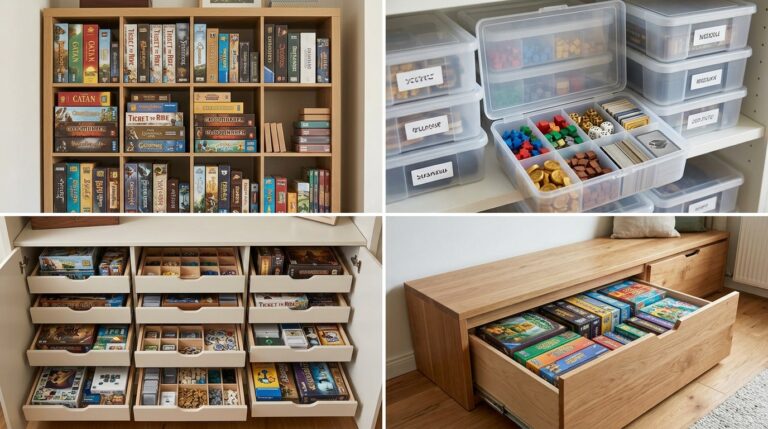
14 ADHD-Friendly Doom Box Decluttering Hacks


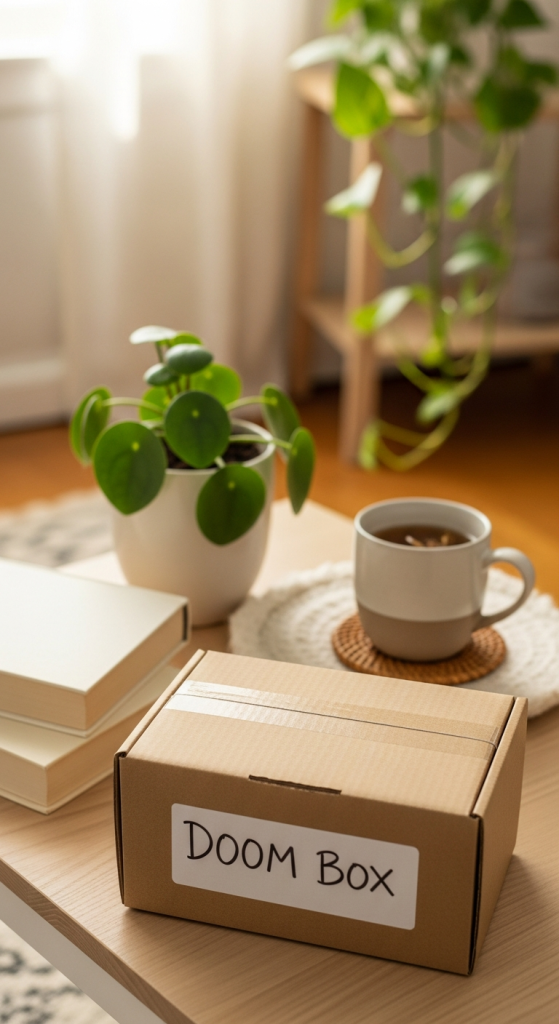
Doom boxes, short for “Didn’t Organize, Only Moved” boxes, are a common reality for people with ADHD. They’re the containers where random items land when tidying feels overwhelming: papers, chargers, makeup, mail, cords, notebooks, and objects that don’t yet have a home. Doom boxes aren’t a failure, they’re often a coping strategy used to quickly regain visual calm.
The problem arises when doom boxes pile up and start creating stress instead of relief. Traditional decluttering advice often doesn’t work for ADHD brains because it relies on sustained focus, perfection, or all-or-nothing thinking. The good news? Decluttering doom boxes can be simple, flexible, and even low-pressure when done in ADHD-friendly ways.

Below are 14 ADHD-friendly doom box decluttering hacks designed to reduce overwhelm, honor how your brain works, and make progress without burnout.
1. Redefine Success Before You Start
Success is not “emptying the entire box.” Success can be opening it, sorting for five minutes, or removing just one item. Shifting expectations removes the pressure that often stops progress before it starts.

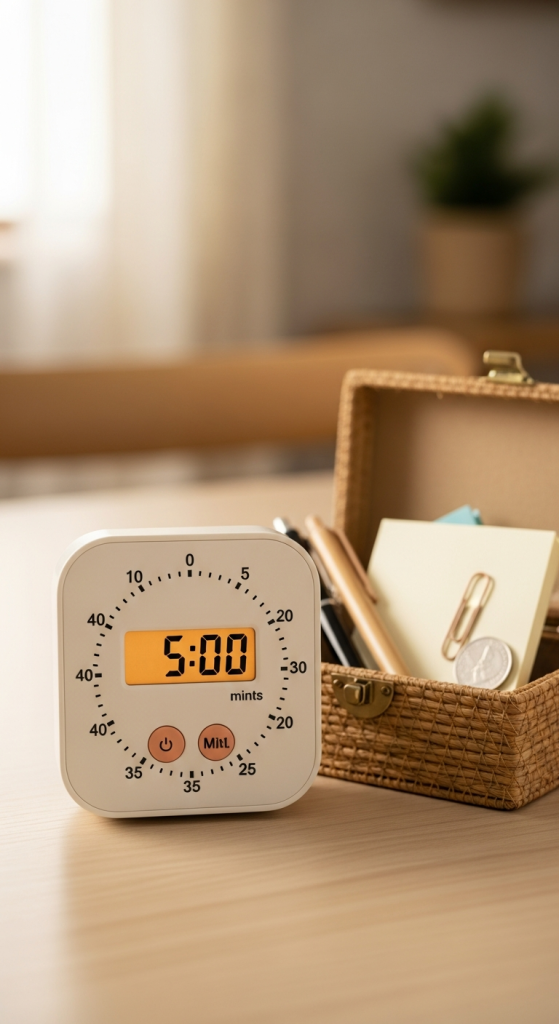
2. Set a Short, Non-Scary Timer
Use a timer for 5–10 minutes instead of committing to a full decluttering session. Short time limits feel manageable and reduce avoidance. When the timer ends, you’re allowed to stop, even if you want to continue.
3. Declutter One Doom Box at a Time
Never open multiple doom boxes at once. That visual chaos can trigger overwhelm. Focus on a single box, drawer, or bag to keep your mental load low and your attention anchored.

Also Read: 14 Thrifted Home Decor Finds
4. Use the “Only Touch It Once” Rule
When you pick something up, make a decision immediately: keep, toss, donate, or relocate. Avoid creating mini piles that require future decisions, those often turn into new doom zones.
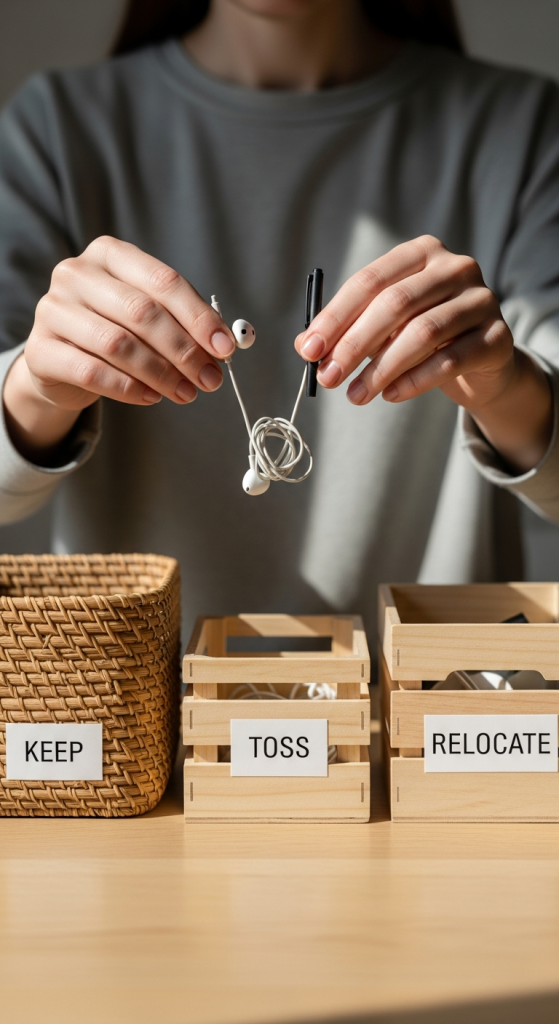
5. Create Simple Sorting Categories
Instead of complex systems, use 3–4 broad categories like “trash,” “belongs elsewhere,” “important,” and “unsure.” Fewer choices mean faster decisions and less mental fatigue.

6. Keep a Small “Unsure” Container
Indecision is normal with ADHD. Give yourself permission to not decide everything right now by using a small “unsure” box. Just make sure it’s smaller than the original doom box to prevent endless deferral.

7. Declutter While Watching or Listening to Something
Body-doubling through background noise helps many ADHD brains stay engaged. Play a podcast, comfort show, or music while sorting, it makes the task feel less demanding and more tolerable.

8. Sit on the Floor or Bed Instead of Standing
Physical comfort matters. Sitting down reduces fatigue and makes it easier to stay present. Decluttering doesn’t have to look productive to be effective.

9. Use Open Containers Instead of Drawers
Clear bins, baskets, or open trays make it easier to see what you have. Out-of-sight storage often leads to forgotten items and repeated doom box creation.

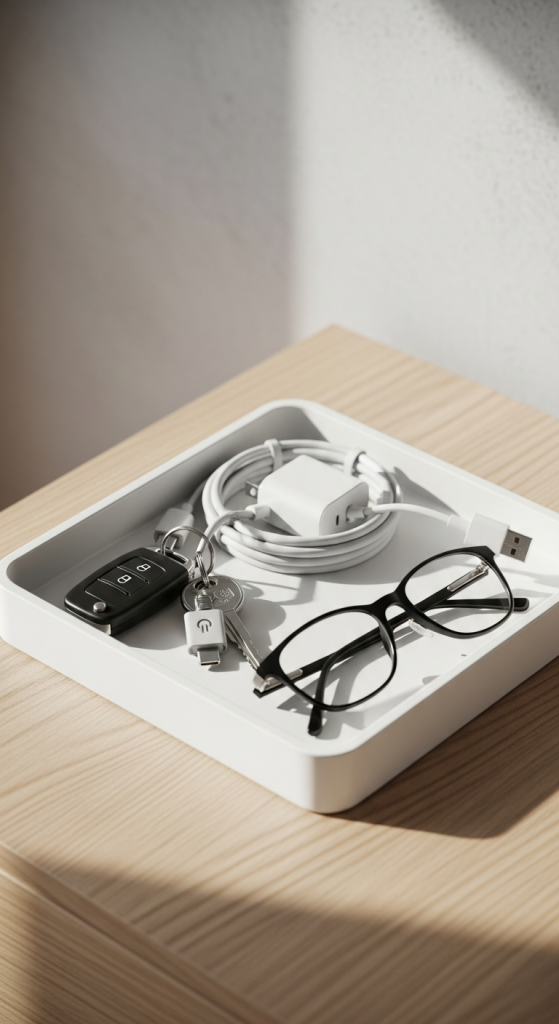
10. Give Frequently Used Items a “Drop Zone”
Some doom box items exist because they’re used daily but don’t have a designated home. Create intentional drop zones for keys, chargers, glasses, or notebooks to stop future clutter before it starts.
11. Don’t Over-Organize During Decluttering
Decluttering and organizing are separate tasks. Focus first on reducing volume. Trying to create perfect systems mid-declutter often leads to paralysis and unfinished boxes.

12. Celebrate Partial Wins Immediately
Finished one section? Removed trash? That counts. Dopamine matters. Acknowledge progress right away, through a break, a stretch, or a small reward, to reinforce positive momentum.

13. Revisit Doom Boxes Regularly, Not Perfectly
Schedule gentle check-ins every few weeks rather than waiting for a full reset. Doom boxes shrink faster when they’re addressed consistently in small doses instead of all at once.

14. Release Shame Around Doom Boxes
Doom boxes are not a character flaw. They’re a practical response to executive dysfunction. Approaching them with curiosity instead of judgment makes decluttering easier and more sustainable.
Why ADHD-Friendly Decluttering Actually Works
These hacks prioritize energy, attention, and emotional regulation over rigid rules. When decluttering works with your brain instead of against it, it becomes less draining and more achievable.
Final Thoughts
These 14 ADHD-friendly doom box decluttering hacks are about progress, not perfection. By lowering the barrier to action and honoring how your mind works, you can turn doom boxes from stress points into manageable, temporary tools instead of permanent clutter.